Module 1
Module 1 - Automotive Industry Fundamentals
Build the professional habits, vocabulary, tool awareness, and service-information skills that every entry-level technician needs before touching a vehicle.
Lesson 1.1
Lesson 1.1 - Introduction to Automotive Repair
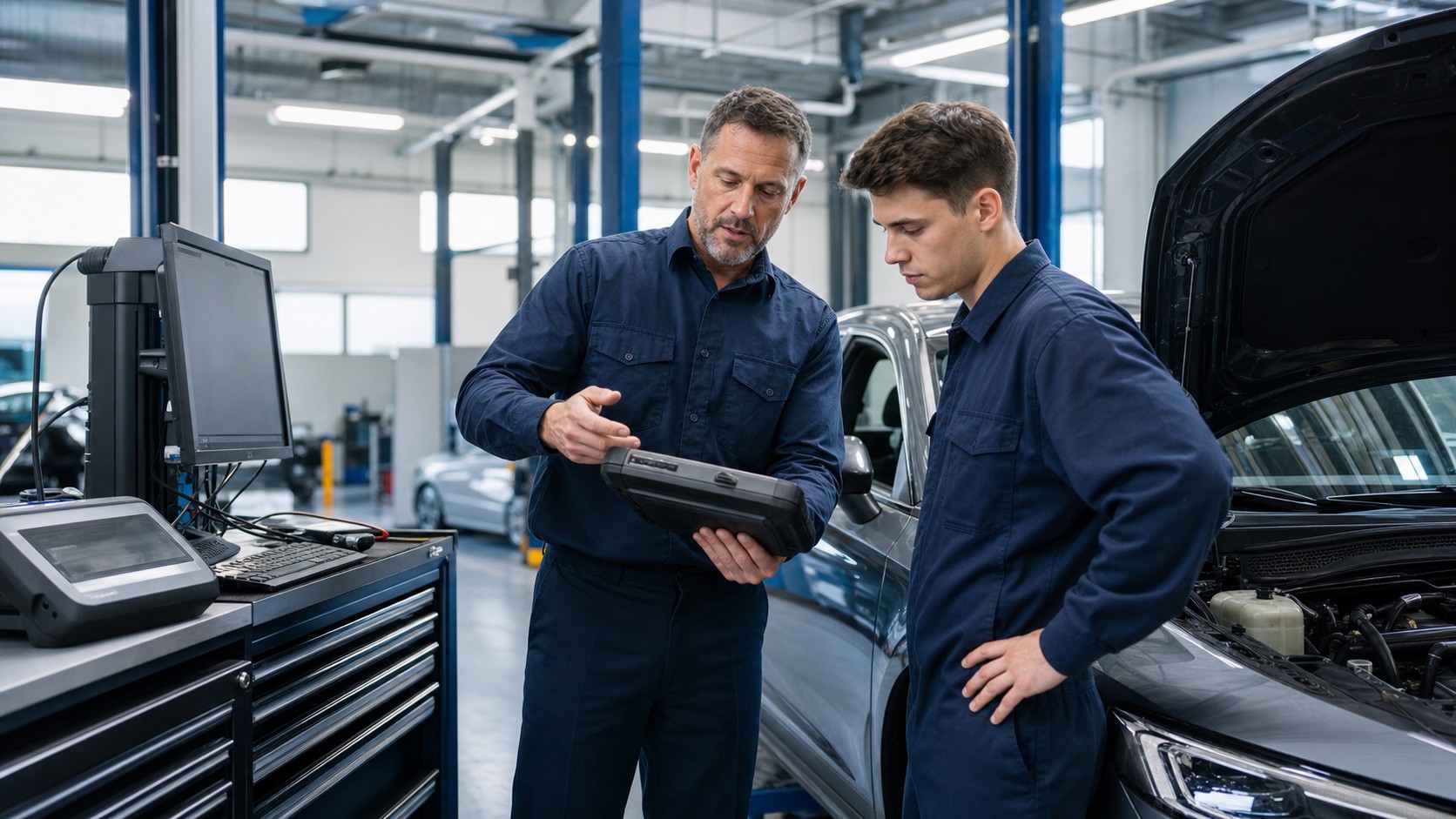
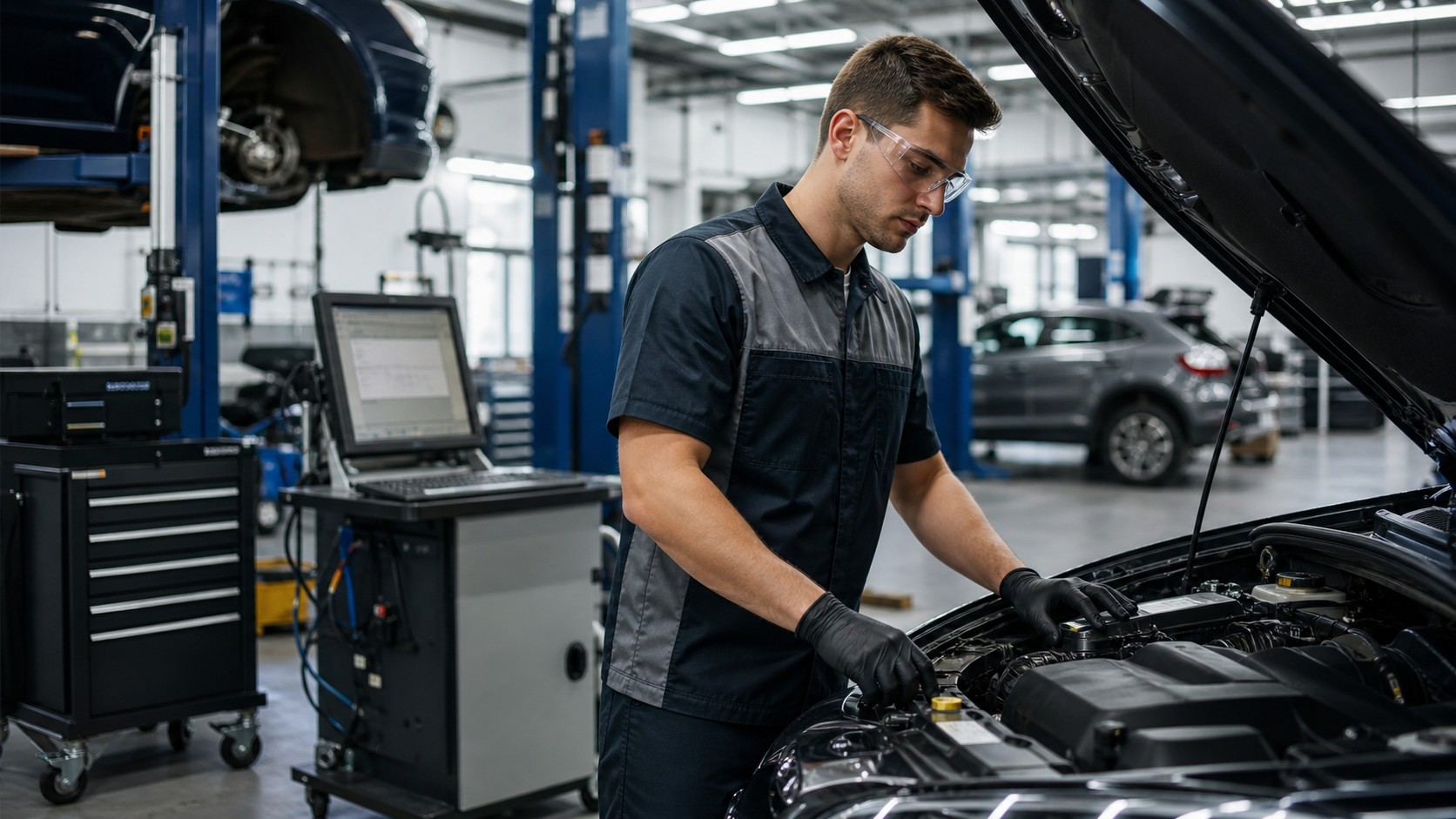
The automotive industry is one of the largest industries in the world. Millions of vehicles travel roads every day, and every one of those vehicles requires maintenance, repairs, inspections, and diagnostics. Behind every reliable vehicle is a technician who understands how vehicle systems work and how to keep them operating safely. Many people think automotive repair is simply replacing broken parts. Professional technicians know it is much more than that. Modern automotive repair requires knowledge, critical thinking, problem-solving skills, communication skills, and continuous learning. Today's vehicles contain advanced electronics, computer networks, sensors, and safety systems that require technicians to think like investigators. A professional technician does not guess. A professional technician diagnoses. Understanding this difference is the first step toward becoming successful in the automotive industry.
Lesson 1.2
Lesson 1.2 - Shop Safety and Professional Habits
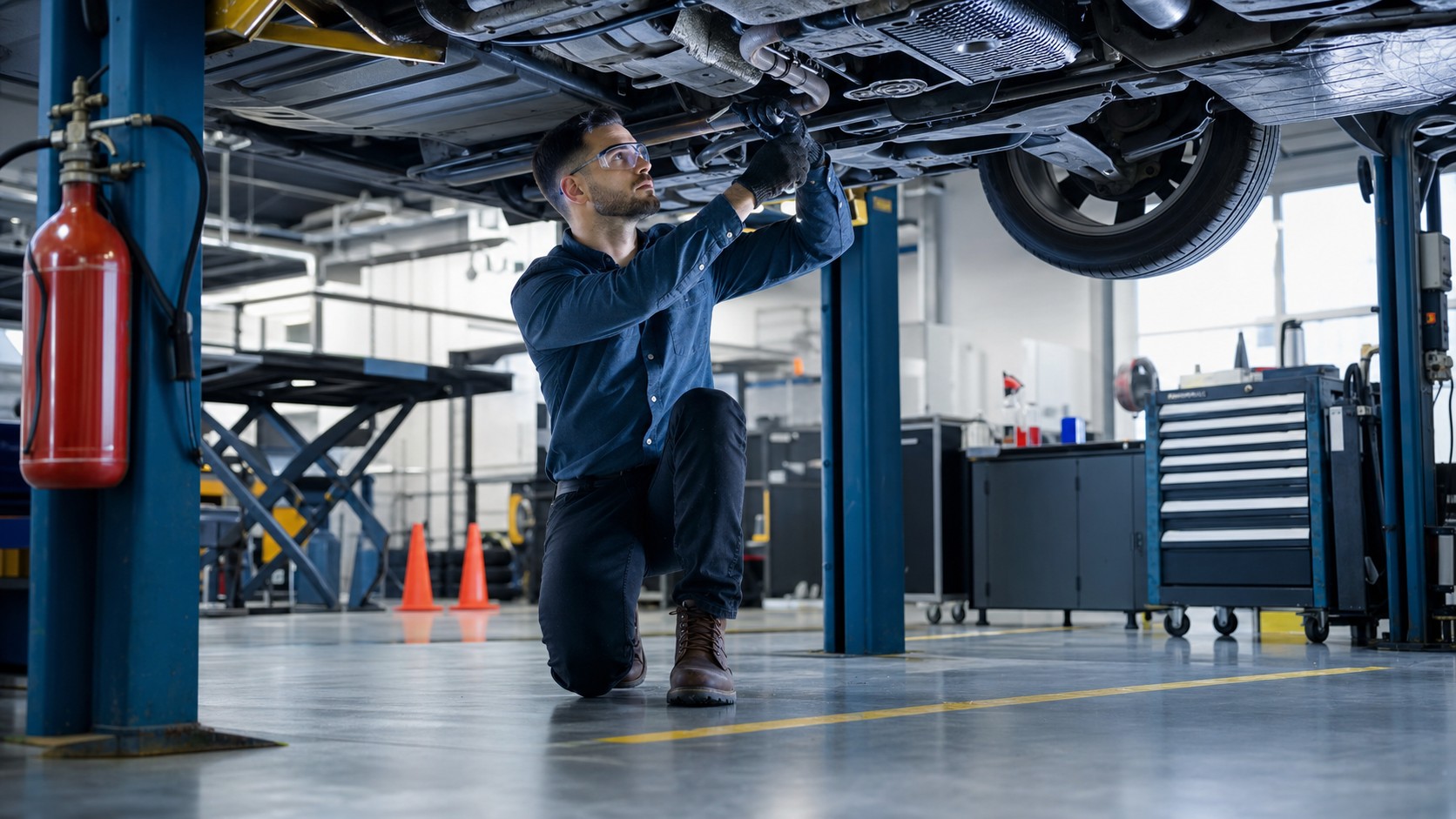
A professional technician's first responsibility is safety. Every year, thousands of automotive workers are injured because of preventable mistakes involving tools, lifting equipment, chemicals, electricity, moving vehicles, and poor workplace habits. This lesson teaches students how to work safely in a professional automotive environment while developing the habits expected from skilled technicians. Students will learn how to identify hazards, use personal protective equipment (PPE), maintain a clean workspace, and build professional behaviors that lead to long-term career success. By mastering these principles early, students create a foundation that protects themselves, their coworkers, their customers, and the vehicles they service.
Lesson 1.3
Lesson 1.3 - Basic Automotive Tools and Equipment
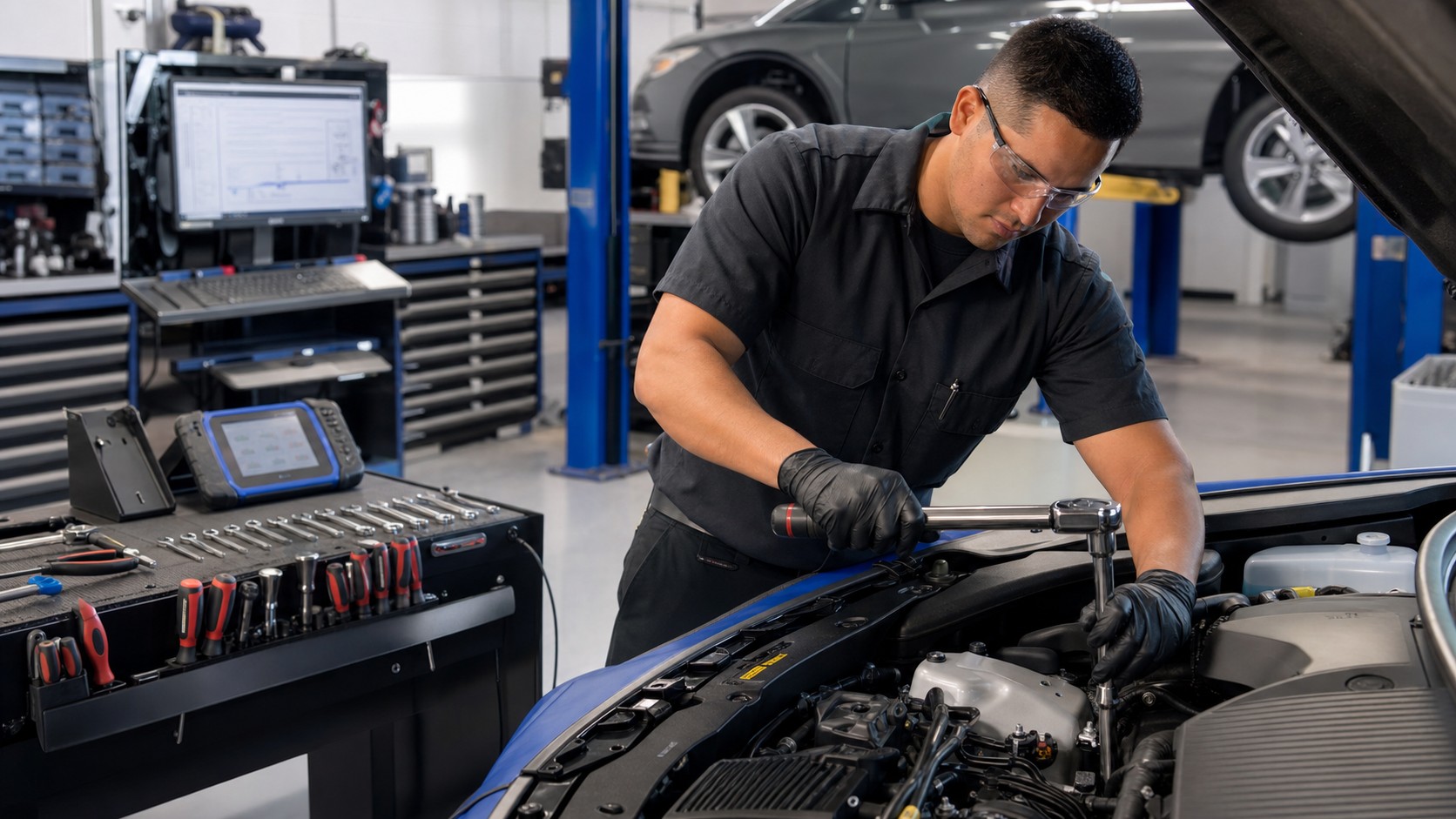
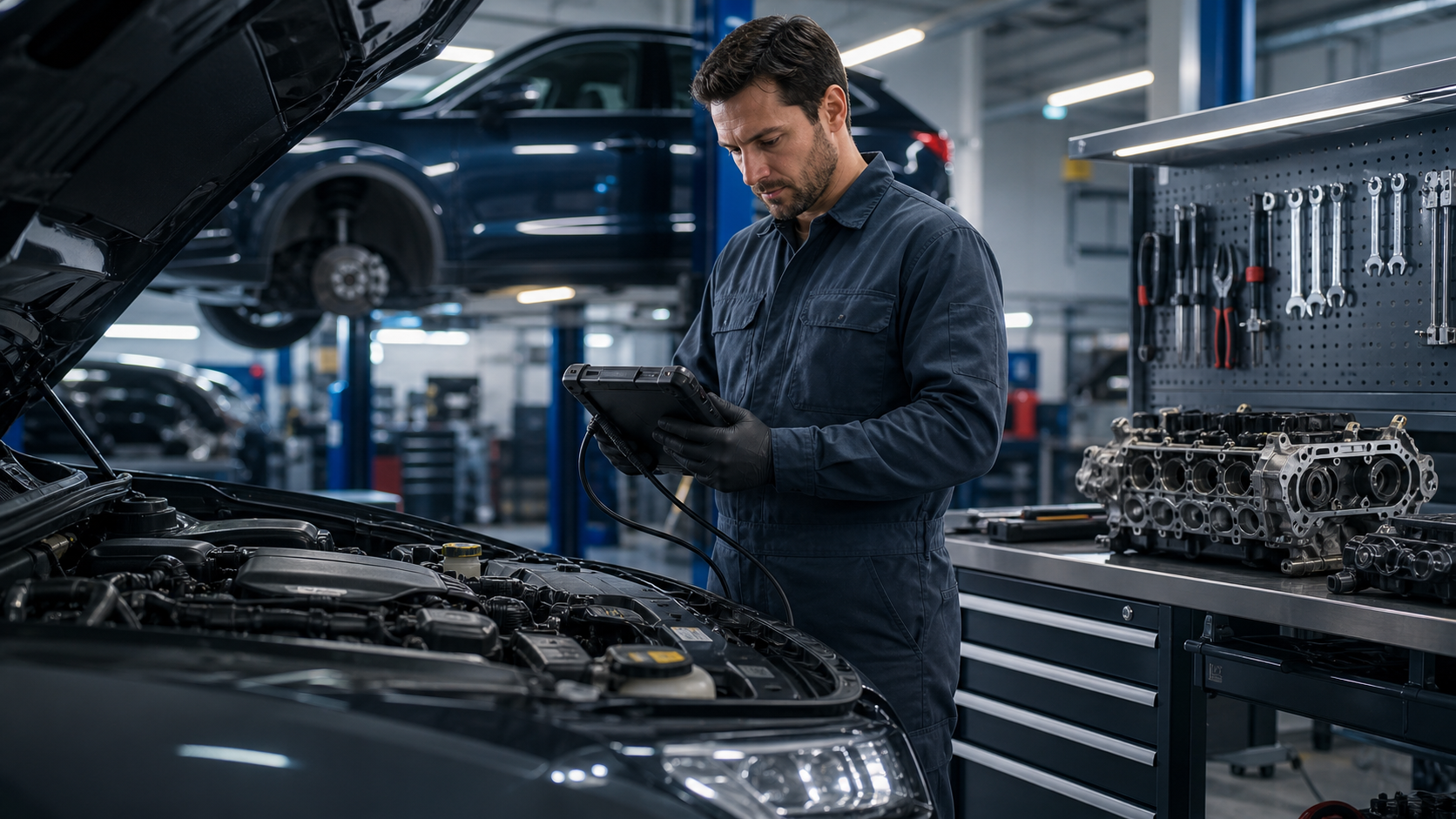
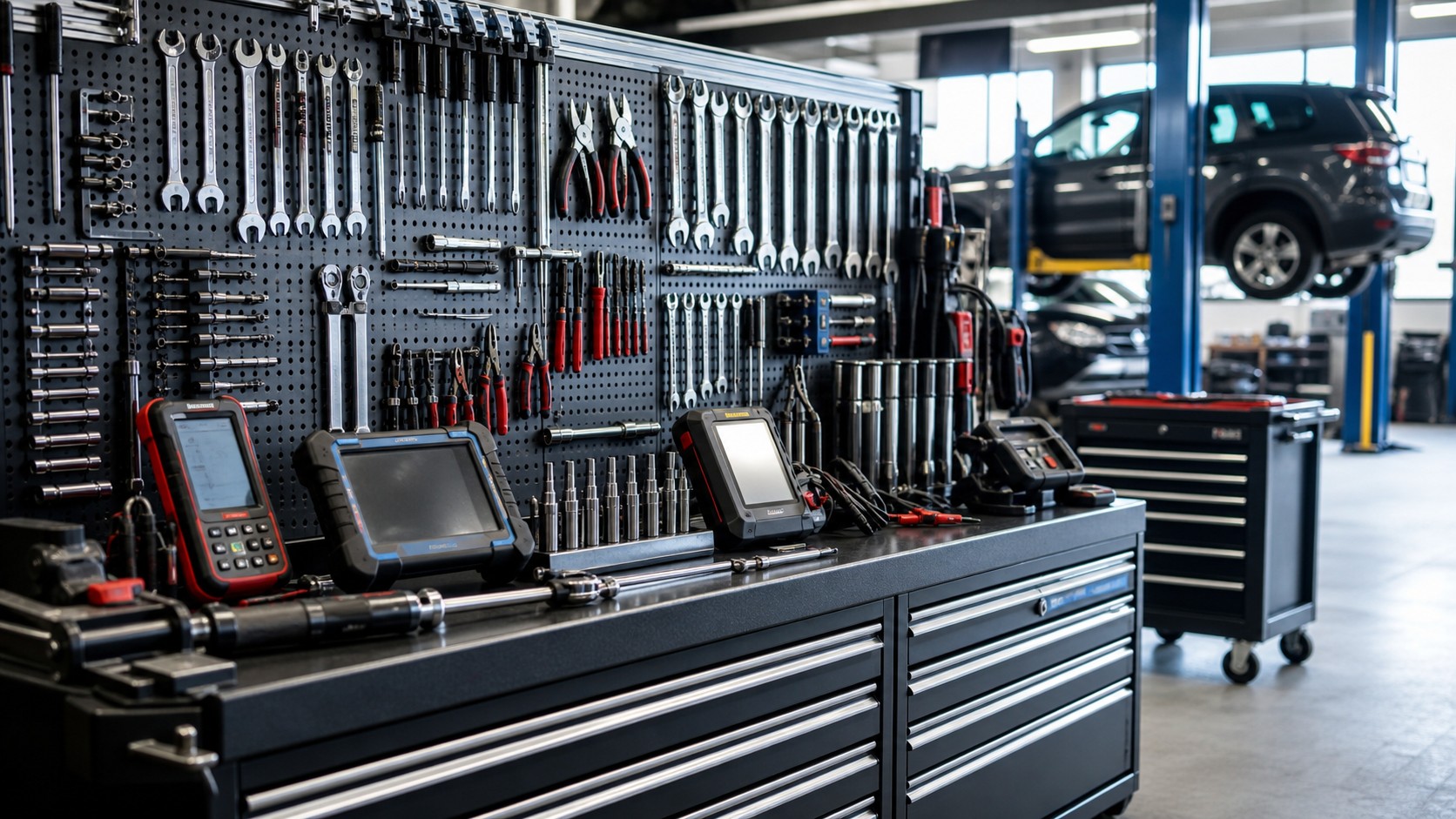
Professional automotive repair depends on using the correct tools safely and correctly. A technician does not need every tool in the world to begin, but they must understand the purpose of the most important tools used in daily repair work. This lesson introduces students to basic hand tools, power tools, diagnostic tools, lifting equipment, and tool organization. Students will learn why tool selection matters, how improper tool use can damage vehicles, and how organized technicians work faster, safer, and more professionally.
Lesson 1.4
Lesson 1.4 - Vehicle Identification and Service Information
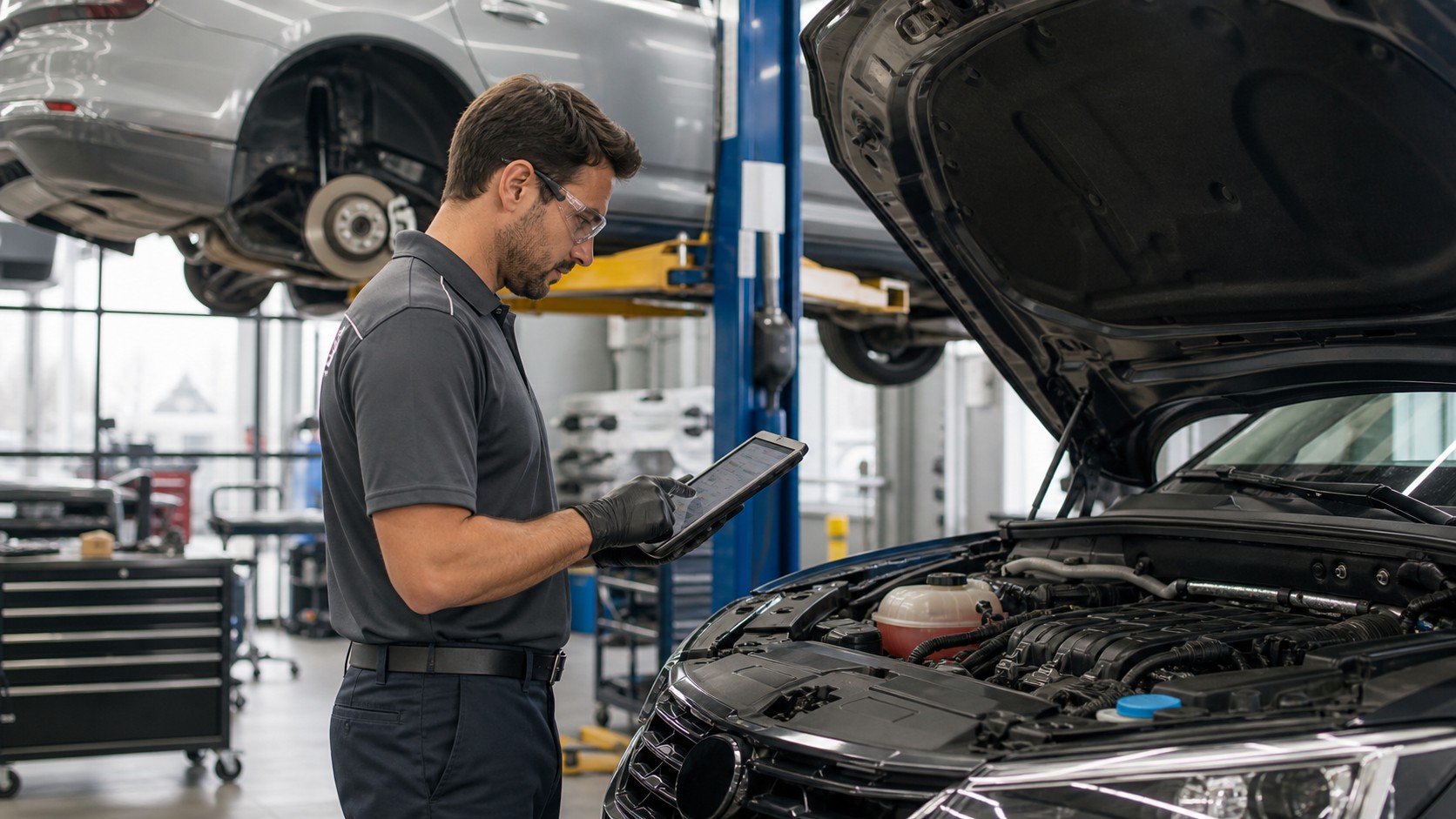
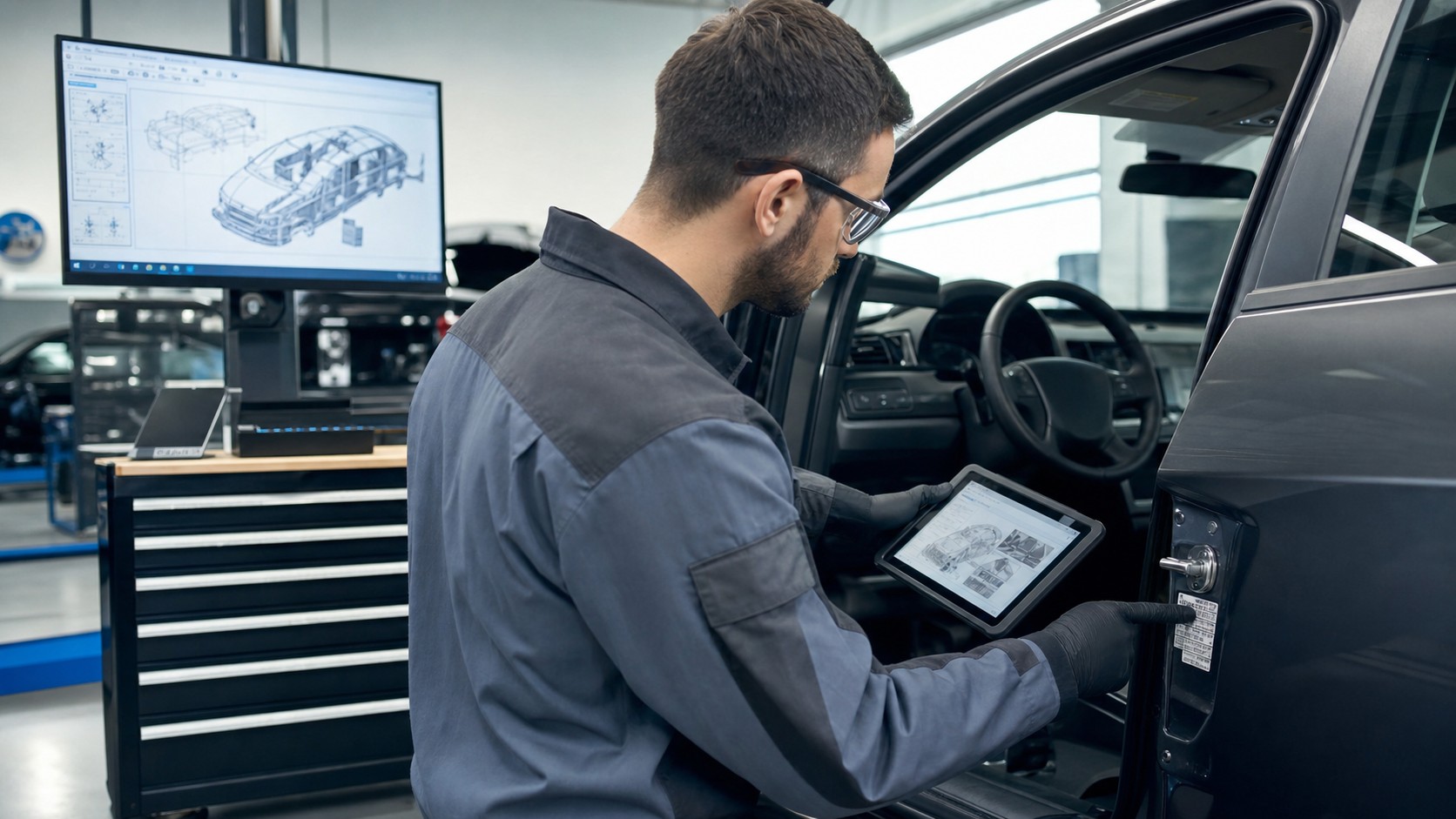
Before any repair begins, professional technicians must correctly identify the vehicle they are working on. A small mistake in vehicle identification can result in ordering the wrong parts, using incorrect specifications, or following the wrong repair procedures. Modern vehicles may look similar on the outside but can have completely different engines, transmissions, electrical systems, and service requirements. This lesson teaches students how technicians identify vehicles accurately, locate important identification information, and access reliable service information before performing repairs.
Lesson 1.5
Lesson 1.5 - Understanding Repair Manuals and Specifications
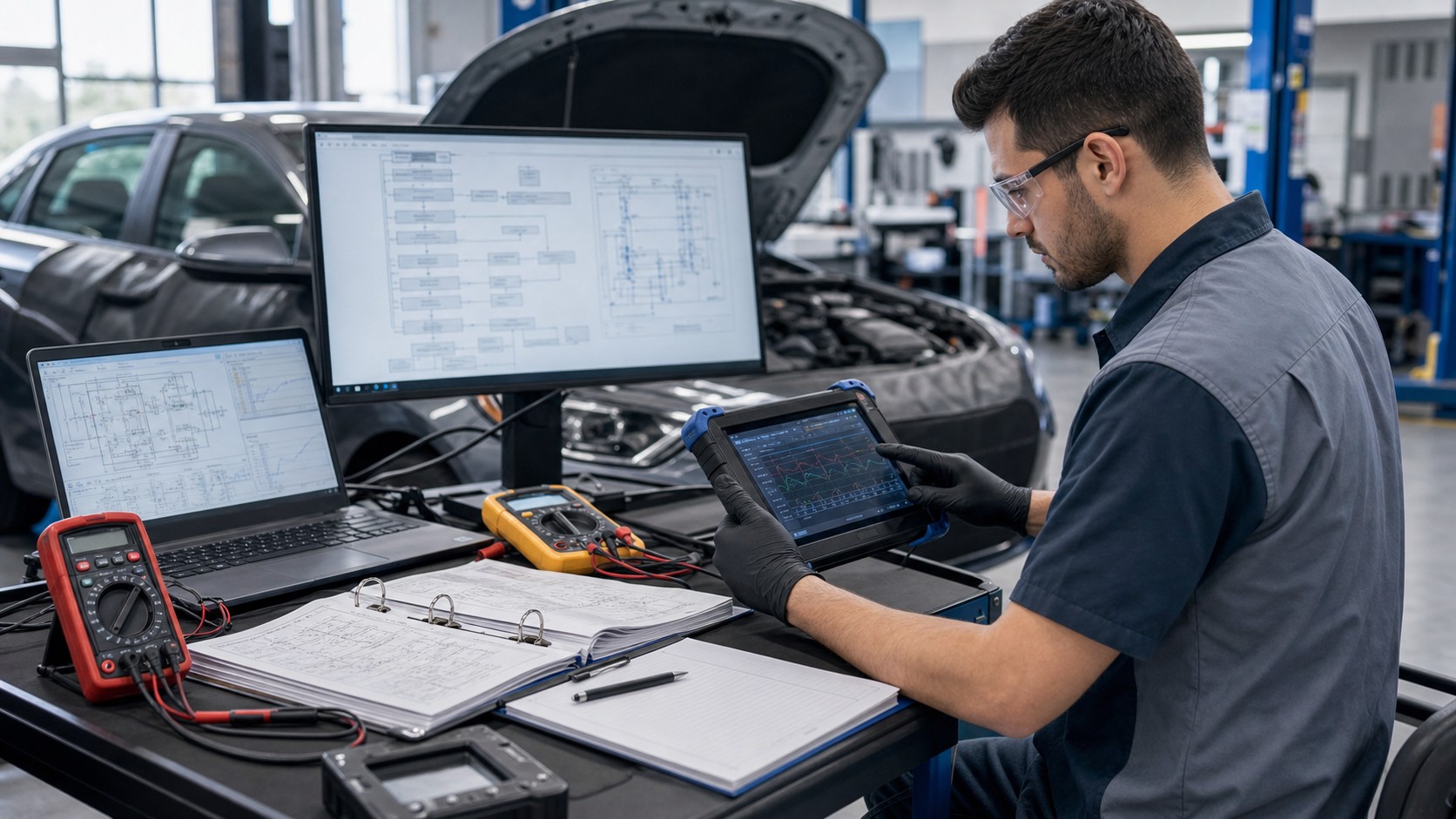
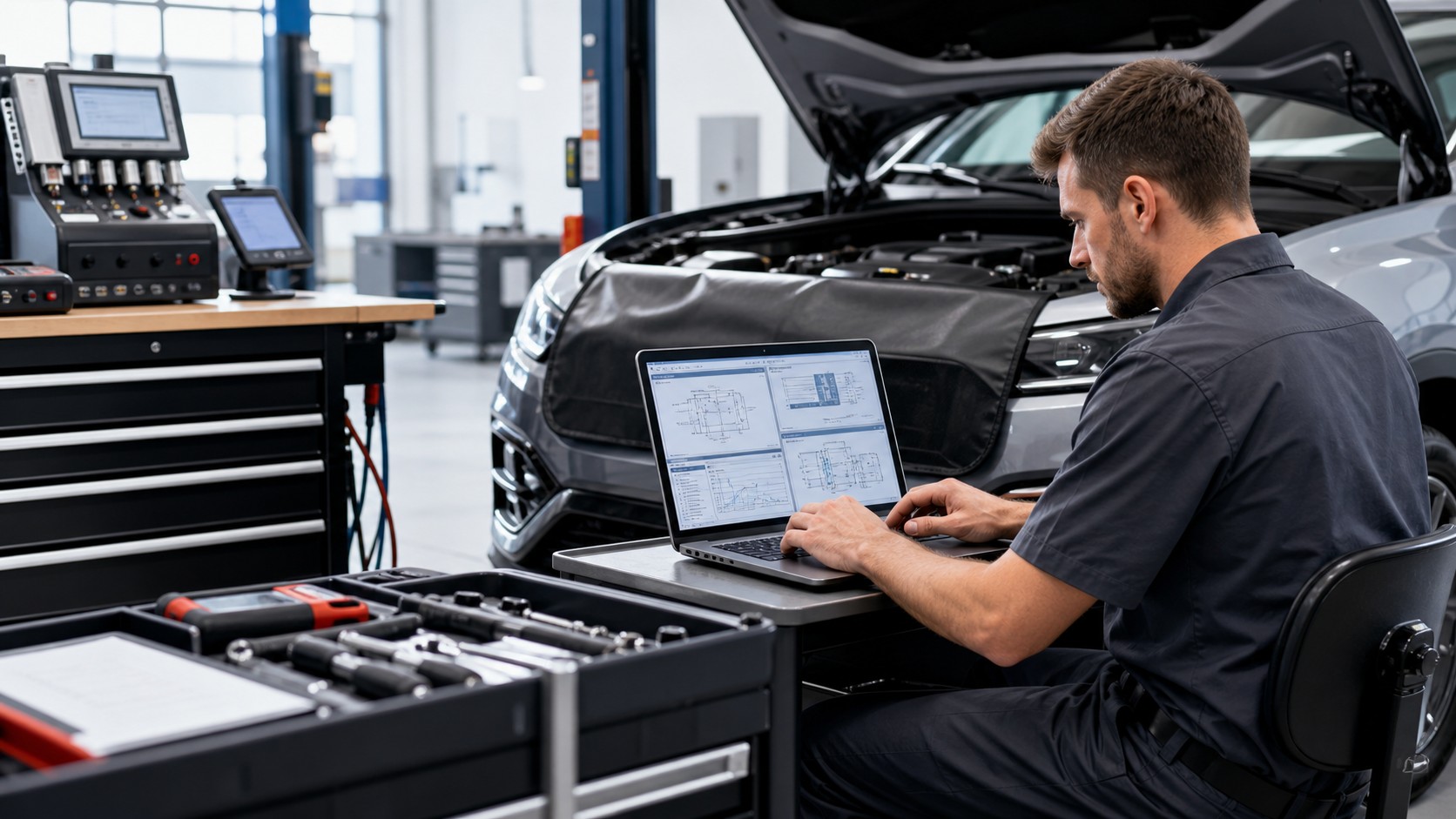
One of the biggest differences between an amateur mechanic and a professional technician is the ability to use repair information correctly. Professional technicians do not rely entirely on memory. Instead, they use repair manuals, service procedures, wiring diagrams, torque specifications, technical service bulletins, and manufacturer documentation. Modern vehicles are becoming more complex every year. Even experienced technicians regularly consult repair information to ensure repairs are performed accurately and safely. This lesson teaches students how to read service information, understand repair procedures, follow specifications, and avoid costly mistakes.